Guide

Banknote Grading Guide

Master professional banknote grading with this comprehensive guide covering authenticity verification, Sheldon Scale condition assessment (1-70), and market appeal evaluation. Learn to identify counterfeits, understand EPQ/PPQ designations, distinguish grade ranges, and recognize factors affecting value. Essential knowledge for collectors and dealers.

By GCC Grading Team
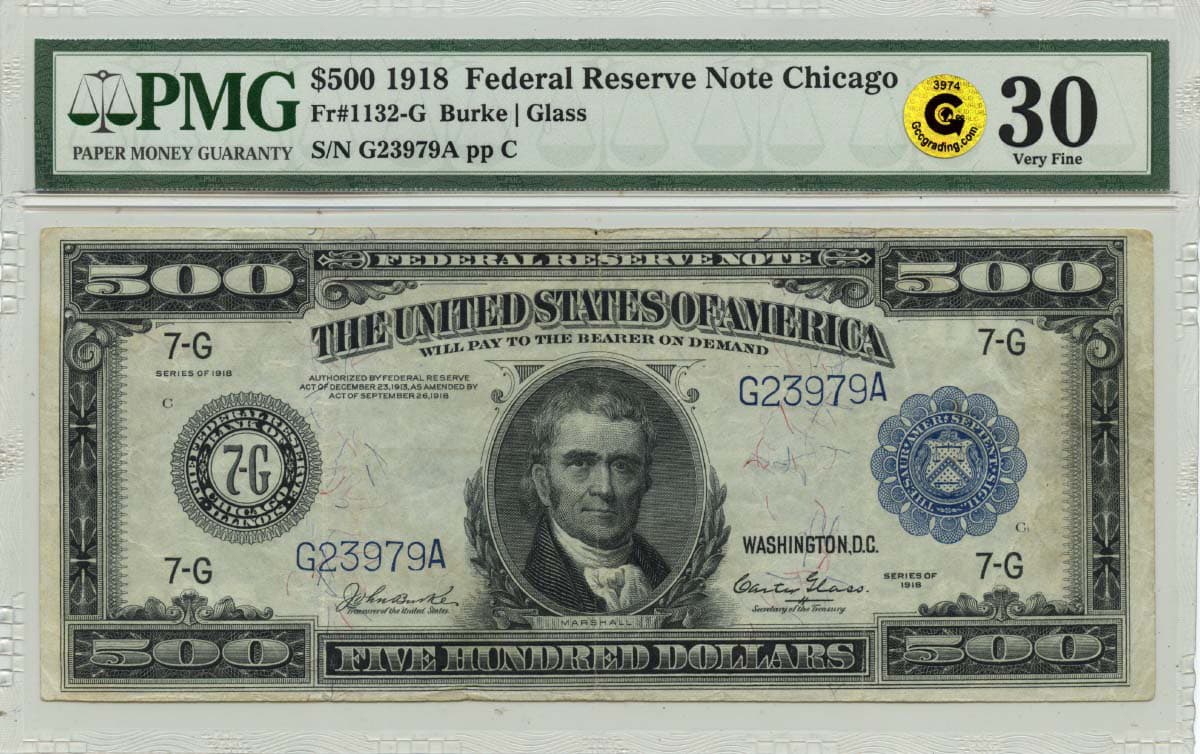
Banknote Grading Guide

Overview

Banknote grading is a multi-step process that determines a note's value based on three core elements:

  1. Authenticity
  2. Condition (Sheldon Scale + Paper Quality)
  3. Market Appeal

Each of these components plays a critical role in assessing a banknote's overall grade and its position in the marketplace.

1. Authenticity

Before evaluating the condition of a banknote, its authenticity must be confirmed. In today's collectible market, counterfeits—especially those intended to deceive collectors—pose a serious threat. While historical contemporary counterfeits may hold value, modern replicas meant to imitate genuine issues do not.

Authenticity verification involves:

  • Identifying the banknote's series, origin, and expected attributes.
  • Checking for security features like fluorescent ink, security threads, microprinting, and hidden plate markers.
  • Understanding historical context: Older notes may lack modern security features and instead rely on intricate engraving and paper/ink signatures that are difficult to replicate.

As printing technologies have evolved, so have anti-counterfeit measures. Expert knowledge is essential for distinguishing authentic notes from reproductions, especially with older issues.

2. Condition

Once authenticity is established, the banknote's physical condition is assessed using the Sheldon Grading Scale (1–70). This numerical scale evaluates the degree of wear, handling, and overall preservation of the note.

The Sheldon Grading Scale

| Grade Range | Description | |---|---| | 70 | Perfect Gem Uncirculated | | 60–69 | Uncirculated | | 50–58 | About Uncirculated (AU) | | 40–45 | Extremely Fine (XF) | | 20–35 | Very Fine (VF) | | 12–15 | Fine | | 8–10 | Very Good | | 4–6 | Good | | 1–2 | Poor |

Within each grade, paper quality becomes a deciding factor. Notes may carry designations such as:

  • EPQ (Exceptional Paper Quality)
  • PPQ (Premium Paper Quality)

These indicate a note's originality and lack of restoration. However, some notes may not qualify for EPQ/PPQ due to subtle or minor issues like pressing or light cleaning, while others may have more obvious flaws.

Factors That Can Remove EPQ/PPQ Designation

  • Stains
  • Tears or splits
  • Writing/annotations
  • Pinholes
  • Rust
  • Paper pulls or thinning
  • Pressed, treated, or re-embossed surfaces
  • Repairs

Not all issues are immediately visible. Pressing, in particular, may require experience to detect, especially if done subtly. Understanding paper types is key to identifying natural vs. altered qualities.

Understanding Banknote Paper Types

Different paper compositions help determine authenticity and quality:

U.S. Banknote Types

  • Colonial & Obsolete Notes: Varied paper thickness, some with mica or threads, very different from modern issues.
  • Large Size Notes: Linen-based, with thick ink and vibrant embossing. Look for ink "waves" and strong texture from intaglio printing.
  • Small Size Notes: Similar to large size but reduced in dimensions. Still exhibit embossing and light paper rippling from the drying process.

Understanding these differences allows for more accurate grading and detection of tampering or restoration.

The Bubble System

The "Bubble System" illustrates how variability in a note's appearance increases as you move down the grading scale:

  • Grade 70: Very small "bubble" — only perfection qualifies.
  • Grade 15: Large "bubble" — many different appearances may receive the same grade.

This system shows that even within the same grade, banknotes may vary in market value and visual quality. Higher-quality examples within a grade's bubble will command stronger premiums.

The GCC Sticker (Green/Gold) was developed to help identify top-quality notes within each grade's bubble.

Uncirculated Grades (60–70)

Definition: No folds crossing the design from one margin to another.

Grade Insights:

  • 63/64: Uncirculated but poorly centered or with heavier handling.
  • 65/66: Choice to Gem quality with good centering, minor handling.
  • 67/68: Superb centering, little to no visible handling, strong registration.
  • 69/70: Virtually perfect; tiny flaws may separate a 69 from a 70.

Centering, registration (front-to-back alignment), and margin symmetry are key factors here. Since notes have two sides, the front's visual impact often commands higher premiums in the market.

About Uncirculated (50–58)

AU notes feature one or more folds that cross the design. These folds must be visible, either to the eye or under light.

Common Misidentifications:

  • Counting marks: Often mistaken for folds, especially on high-denomination notes.
  • Paper wrinkles: Sharp, linear "as-made" features from the printing process.
  • Security thread shifts or inclusions: Natural traits mistaken as defects.

Proper knowledge of these manufacturing traits can prevent over-penalizing in grading.

Grade Breakdown:

  • 58: One strong fold or break.
  • 53/55: Two folds, with increasing handling.
  • 50: Three folds, minimal handling — often straddling XF territory.

Fold Severity and the XF Line

Understanding fold severity is key to navigating the grading line between AU58 and XF45.

  • XF (45): Generally three or more clear folds.
  • VF (35): Five to six or more folds, with heavier wear.
  • The look and depth of folds, not just count, determine placement on the scale.

3. Market Appeal

Market appeal is a nuanced factor often overlooked in rigid technical grading. It includes:

  • Overall eye appeal
  • Color vibrancy
  • Originality
  • Centering and registration
  • Ink application and fading
  • Natural vs. artificial wear
  • Presence of as-made features

Many historic notes include punch marks, ink smudging, or other elements that are not flaws but part of the note's issuance process. Knowing the difference adds value and prevents undergrading.

Printing Technologies Matter

Understanding print methods helps identify aging patterns:

  • Intaglio: Raised ink, prone to flattening or smudging over time.
  • Lithography: Flat printing, wears differently.
  • Letterpress: Can include text only or mixed formats.

Grading must consider how each print type reacts to wear and circulation.

Technical Grading vs. Eye Appeal

Often, two notes may receive the same grade but look completely different:

  • A note with three soft folds vs. one with deep creases.
  • A note with stronger color and brightness may be more appealing — and more valuable — despite identical grades.

This is why market appeal and paper originality must be considered together with technical condition. Green and Gold GCC Stickers help collectors quickly identify such higher-quality examples within a grade range.

Conclusion

Banknote grading is a balance of technical criteria, paper originality, and market eye appeal. The ability to:

  • Distinguish as-made features from damage
  • Understand different paper types and print methods
  • Identify enhancements or treatments
  • Evaluate fold severity accurately

...makes all the difference in assigning a fair, market-accurate grade and determining true value. The most informed collectors and dealers combine technical grading expertise with market insight — and use tools like the GCC Sticker system to maximize their confidence and returns.